
3D Learning Hub

3D printed clothes in 2026 : What are the best projects?

Key Takeaways

  • 3D printed fashion has evolved from experimental couture to a reliable production method for clothes, costumes, accessories, footwear, and jewelry.
  • Additive manufacturing enables complex geometries, lightweight structures, and high levels of customization that are difficult to achieve with traditional techniques.
  • Industrial 3D printing technologies such as SLS and flexible polymers make fashion pieces wearable, durable, and performance‑ready.
  • Digital production supports faster lead times, on‑demand manufacturing, and reduced material waste.
  • Real‑world projects produced with Sculpteo demonstrate how 3D printing is already shaping the future of fashion across multiple industries.

    Introduction

    At Sculpteo, we see firsthand how additive manufacturing is reshaping the fashion industry. What started as an experimental tool for avant‑garde designers has matured into a reliable production method for clothes, costumes, accessories, footwear, and jewelry. Thanks to advances in materials, software, and industrial 3D printing technologies, 3D printed fashion is no longer just about spectacle it’s about wearability, performance, speed, and sustainability.

    From runway‑ready garments to entertainment costumes and consumer products, 3D printing enables designers and brands to create complex, lightweight, and customizable pieces that would be difficult or impossible to manufacture traditionally. In this article, we explore how 3D printed fashion is evolving, with concrete examples and real projects produced with Sculpteo.

    Fashion and 3D Printing: Why 3D Printed Fashion Keeps Growing

    Design Freedom Without Compromise

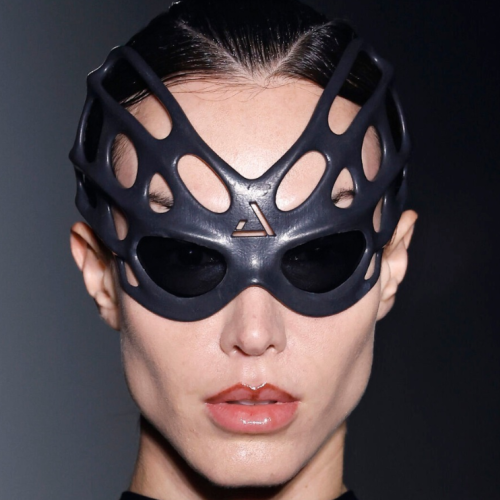
    One of the biggest advantages of 3D printed fashion is geometric freedom. Additive manufacturing allows designers to create intricate meshes, lattice structures, and organic shapes without the constraints of molds or tooling. This opens new creative possibilities for garments, accessories, and footwear, whether the goal is a bold visual statement or a functional, body‑responsive design.

    Complex designs that would require extensive manual labor or assembly can be produced directly from a digital file, saving time while maintaining precision and repeatability.

    Sustainability and Smarter Manufacturing

    Sustainability has become a key driver for innovation in the fashion industry. With 3D printing, material is used only where needed, significantly reducing waste compared to subtractive or textile‑based manufacturing. Digital production also supports on‑demand manufacturing, limiting overproduction and excess inventory.

    Many fashion projects now rely on durable polymers, recycled materials, and optimized structures such as hollow parts or lattices to minimize material use while preserving strength and flexibility.

    casque lattice

    Designers can, for example:

    • Create lace‑like or lattice structures that mimic textiles while remaining lightweight and breathable.

    • Use modular panels that can be reconfigured or reassembled into different silhouettes.

    • Experiment with volumes and morphing shapes that respond to body movement or lighting.

    These experiments are not limited to haute couture; they form the basis of new approaches to jackets, dresses, tops, and accessories that can be iterated quickly and tested in real‑life conditions.

    Applications of 3d Printed Fashion

    3D Printed Clothes: From Concept to Runway

    Couture 3D Printed Armor by Rohan Mirza

    3D artist and fashion designer Rohan Mirza worked with Sculpteo to turn a digital armor concept into a full‑scale runway piece. A detailed, body‑covering structure that looks hyper‑real, stays flexible on the catwalk, and can be produced in just a few days.

    The armor was printed using Multi Jet Fusion (MJF) in Ultrasint® TPU 01, a flexible material that follows body movement while remaining robust. The design is split into segments linked with lacing, allowing it to adapt to different morphologies and transforming a traditionally rigid object into a body‑responsive garment.

    A key goal was to move away from the typical shiny, layered “prototype” look of desktop prints. With MJF, the surface appears dense and matte, closer to leather or mineral rather than plastic, which surprised many visitors who did not immediately recognize the piece as 3D printed.

    By partnering with Sculpteo, Rohan Mirza accessed industrial printers, advanced materials, and expert support from file preparation to production, ensuring the final piece met both aesthetic and functional expectations.

    Collection Virus by Anastasia RUIZ (ESMOD Paris) in collaboration with Sculpteo

    3D printed clothes anastasia Ruiz white

    A key example of everyday 3d print fashion is the Virus collection, created by young designer Anastasia Ruiz in collaboration with Sculpteo Using Selective Laser Sintering (SLS) in Ultrasint® TPU 88A . Rather than replacing fabric, this project treats 3D printing as a complementary material, adding printed elements onto textiles to create reliefs and structures that move with the body. By integrating 3D printed parts into ready‑to‑wear silhouettes instead of runway‑only showpieces, the collection helps democratize 3D printed clothes and shows how these technologies can fit into daily wardrobes.

    3D Printing for Costumes and Entertainment

    3D Printed Costume for Ubisoft

    3d print fashion is also a valuable tool for entertainment, where costumes must be visually strong and performance‑ready. For Just Dance 2020, Ubisoft chose Sculpteo to help design a 3D printed costume for one of the game’s dancers.

    Using Selective Laser Sintering (SLS) and nylon, Sculpteo produced lightweight yet resistant parts with complex meshes and cut‑outs that would have been difficult to achieve by hand. Internal hollowing and lattice structures helped reduce weight, preserving the dancer’s freedom of movement, while digital production made it easier to meet tight schedules.

    This project demonstrates how 3d print fashion can support creative teams in film, television, and gaming when they need precise, repeatable designs that can handle intensive use.

    It is now possible to use additive manufacturing to create costumes for the film industry, but also for video games. You might have heard about Sculpteo’s collaboration with Ubisoft for their Just Dance 2020 video game! The goal here was to create a lightweight costume, with an ambitious design but that shouldn’t hinder the dancer’s performance.

    Get more info about this great project in the following video: 

    3D Printed Accessories: Helmets, Bags, and Statement Pieces

    3D printed bag
    3D printed eyewear

    JNORIG × Sculpteo at 080 Barcelona Fashion Week

    Accessories are one of the fastest‑growing segments of 3D printed fashion. A standout example is the collaboration between JNORIG and Sculpteo presented at the 33rd 080 Barcelona Fashion Week.

    The Systematic Disruption collection introduced JNORIG’s first‑ever 3D printed helmet and bag, produced using Ultrasint® TPU01 and additive manufacturing. The project highlights how flexible materials and advanced printing technologies can be used to create bold, functional accessories that blend fashion and technology.

    By leveraging TPU and complex geometries, the collection demonstrates the potential of 3D printing to redefine accessories through lightweight structures, durability, and distinctive aesthetics.

    3D Printed Footwear: Performance and Comfort

    3D printed footwear

    The CRYPTIDE ONE x Sculpteo

    Footwear is another area where additive manufacturing is making a lasting impact. The CRYPTIDE ONE is a fully 3D printed shoe designed with comfort, modularity, and durability in mind with MJF Ultrasint® TPU01.

    Produced using 3D printing technologies, the CRYPTIDE ONE features a replaceable heel‑cushion, allowing users to enhance comfort and extend the lifespan of the shoe. This modular approach reflects one of the key strengths of 3D printed footwear: the ability to iterate, customize, and improve specific components without redesigning the entire product.

    All models are fully 3D printed and available at thecryptide.com, showcasing how additive manufacturing can support consumer‑ready footwear with functional innovation.

    3D Printed Jewelry: Precision, Customization, and Small‑Batch Production

    3D printed jewelry is now becoming more and more common. 3D printing is a perfect method to launch a jewelry business, for both prototyping and production, additive manufacturing can be used to improve your product and process on many different levels! At Sculpteo, we offer great 3D printing technologies, suitable for the creation of your jewelry parts.

    3D printed jewelry

    It’s possible to use metal 3D printing, with technologies such as Lost Wax Casting, and different materials such as BrassSterling Silver, or Bronze. These precious metals can be beneficial for your projects. Resin and plastic 3D printing can also be used for jewelry projects, Selective Laser Sintering or Polyjet technologies can be useful to create accurate parts.  

    If you don’t want to produce your jewelry using additive manufacturing, keep in mind that this technology can be used to create your jewelry molds. An interesting use of additive manufacturing is the creation of master 3D printed molds for your parts!


    How to Start a 3d Print Fashion Project with Sculpteo

    Whether you are a fashion student, an independent designer, or part of a brand, you can integrate 3D printing into your creative process without owning industrial machines.

    A typical workflow with Sculpteo looks like this:

    1. Design your 3D model
      Use CAD or specialized fashion software to create your garment, accessory, or component. Tools that support organic modeling and surface control are particularly useful for 3d print fashion.

    2. Choose the right material and technology
      For wearable pieces, flexible polymers like TPU or nylon printed with Multi Jet Fusion (MJF) or Selective Laser Sintering (SLS) are often a good starting point. Rigid accessories may benefit from strong plastics, resins, or metals depending on the application.

    3. Upload your file to Sculpteo’s online 3D printing service
      On Sculpteo’s platform, you can upload your 3D file, select materials and finishes, and receive an instant quote. The interface also allows you to check scale, estimated cost, and production lead times.

    4. Iterate and produce
      Many designers start with prototypes to test fit and comfort, then refine their design before launching a small production run. Thanks to on‑demand manufacturing, you can order exactly the quantity you need.

    This approach allows you to explore 3d print fashion without large upfront investments, while benefiting from industrial quality and professional support.

    The Future of 3D Printed Fashion

    3D printed fashion continues to evolve from experimental couture toward practical, wearable products. Advances in materials, including flexible polymers and sustainable options, are making garments and accessories more comfortable and durable. Designers are increasingly combining additive manufacturing with other technologies such as digital design, scanning, and electronics to create smart, responsive fashion pieces.

    As sustainability, customization, and speed become central to the fashion industry, 3D printing stands out as a powerful manufacturing solution. From runway armor to gaming costumes, helmets, shoes, and jewelry, additive manufacturing is no longer a niche it’s a core tool shaping the future of fashion.

    If you have a 3D printing idea and want to bring it to life right now, you can upload your 3D models on our online 3D printing service.

    People Also Ask

    Is 3D printed fashion wearable in everyday situations?

    What 3D printing technologies are most commonly used in fashion?

    Which materials are best for 3D printed fashion items?

    Is 3D printed fashion more sustainable than traditional manufacturing?

    Can 3D printing be used for small series or commercial fashion products?

    Get the latest 3D printing news delivered right to your inbox

    Subscribe to our newsletter to hear about the latest 3D printing technologies, applications, materials, and software.