
Login
If you have any trouble logging in to your account, contact us.
Sign Up
To start 3D printing or Laser Cutting, you'll need to create an account here. Once done, you'll be able to upload your files and get live quotes of yours parts
Already have an account? Log In
Home » 3D Learning Hub » People of 3D Printing » People of 3D Printing: Marc Souply
I have been an orthoprosthetist (CPO) since 2001. As you at Sculpteo know well, since many orthoprosthetists are among your clients, our profession is vast and complex. The orthopedic devices we produce are external custom-made medical devices : a specific and regulated category of medical devices that includes external limb prostheses and all families of orthoses (spinal, limb, or seating adaptations for wheelchairs). Our products are, in essence, unique pieces, because each one is made specifically for a given patient.
We intervene in the patient’s care pathway when their functional disability or pathology cannot be treated solely through rehabilitation, medication, or surgery, and naturally when standard industrial solutions are not or are no longer sufficient. This is obvious in the case of limb loss, but less so for certain neurological conditions or traumatic sequelae. That is why many professionals and companies specialize either in prosthetics or orthotics.
For my part, I began my career in orthotics, more by chance than by choice, but it gave me the opportunity to discover CAD/CAM early on. Indeed, the first digital solutions that emerged in our profession in the early 2000s were designed exclusively for spinal orthoses. Since then, I have continued to work on integrating CAD/CAM solutions into the profession I care about most. Digitization, CAD, and both subtractive and additive CAM are, to me, exciting tools that have greatly improved patient care as well as working conditions for professionals. Nevertheless, they must remain tools at the service of practitioners, tools that simplify low–value-added technical tasks so professionals can focus on the medical and human aspects essential to our work.
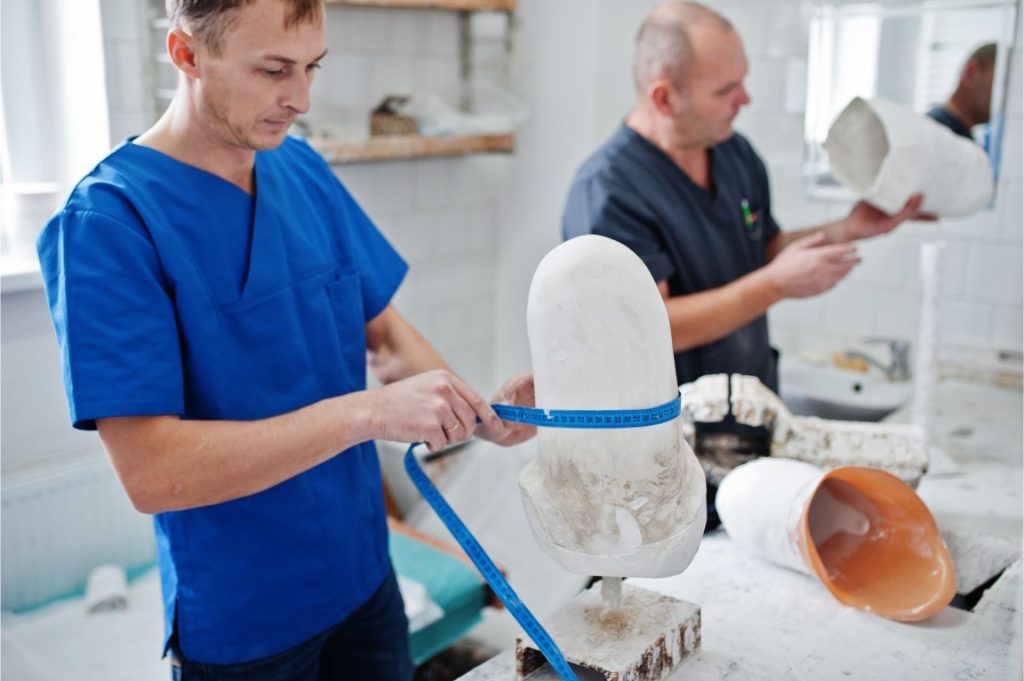
In the early 2000s, our training covered only traditional methods: plaster casting, material processing, understanding the human body and its pathologies. Nothing digital.
The introduction of CAD and CNC milling began with a few companies seeking to simplify the production of large devices such as rigid thermoplastic corsets. A plaster cast of a patient’s torso was extremely cumbersome, heavy, and dangerous for technicians to manipulate. For the patient, having their thorax (and/or neck) cast in plaster could be a true ordeal.
This marked a first turning point: our craft-based profession began to industrialize with computers and CNC machinery.
The first parametric software allowed us to start from a standard shape, enter our measurements, and deform the mesh just as we would sculpt plaster. In certain cases, this spared us from casting the patient, a gain in comfort and time for both patient and professional. The 3D volume was then sent to three-axis milling machines that carved polyurethane blocks. For technicians and practitioners, this was a relief: far simpler to handle, lighter, more efficient than plaster sculpting.
The technologies existed, but their adaptation to our realities did not. Marketing videos never show the difficulties encountered in the field.
Marc Souply
I started using these softwares in 2003. Then came scanners, which once again disrupted our practices. We could envision producing other devices through CAD/CAM, no longer limited to parametric cylindrical forms. However, scanning an object is simple; scanning a human being, especially a disabled patient or child in a hospital environment, is an entirely different challenge. The technologies existed, but their adaptation to our realities did not. Marketing videos never show the difficulties encountered in the field.
So I learned a lot by doing. We would sometimes receive equipment with only a brief demonstration, then be left to figure it out. We had to integrate these tools into clinical practice, make them usable in workshops, understand their technology, and above all invent viable workflows in a sector that was completely new to them.
Moreover, investing in such tools is not without consequences. They must be used wisely, with economic realism in mind. Our products are covered by health insurance, but at fixed prices, and you cannot charge more simply because you used advanced technology. Using technology is fine, so long as it allows us to continue doing our job effectively and sustainably within a viable economic model. And I admit that more than once, with these technologies, we were walking a tightrope.
In France and Europe, the software landscape for orthotics and prosthetics (O&P) is largely dominated by proprietary solutions developed by major industry players. Historically, companies like Canfit (VORUM, Canada), Orten (France, Lecante-Orthopédie) and Rodin (France, Lagarrigue-Orthopédie) paved the way, followed by integrated solutions from Qwadra (Canfit, Neo, Qube…) and Proteor (via Orten).
More recently, newer solutions have emerged: Vytruve, focused on lower-limb prosthetics and filament-based additive manufacturing, and various more specialized online applications.
Despite this variety, only three or four software packages have truly become widespread. Their key value: simple mesh manipulation tools enabling “rectification”, the essential step of virtually sculpting shapes to adapt them to the patient’s anatomy and biomechanics. This is crucial for ensuring comfort, support, control, and therapeutic effectiveness.
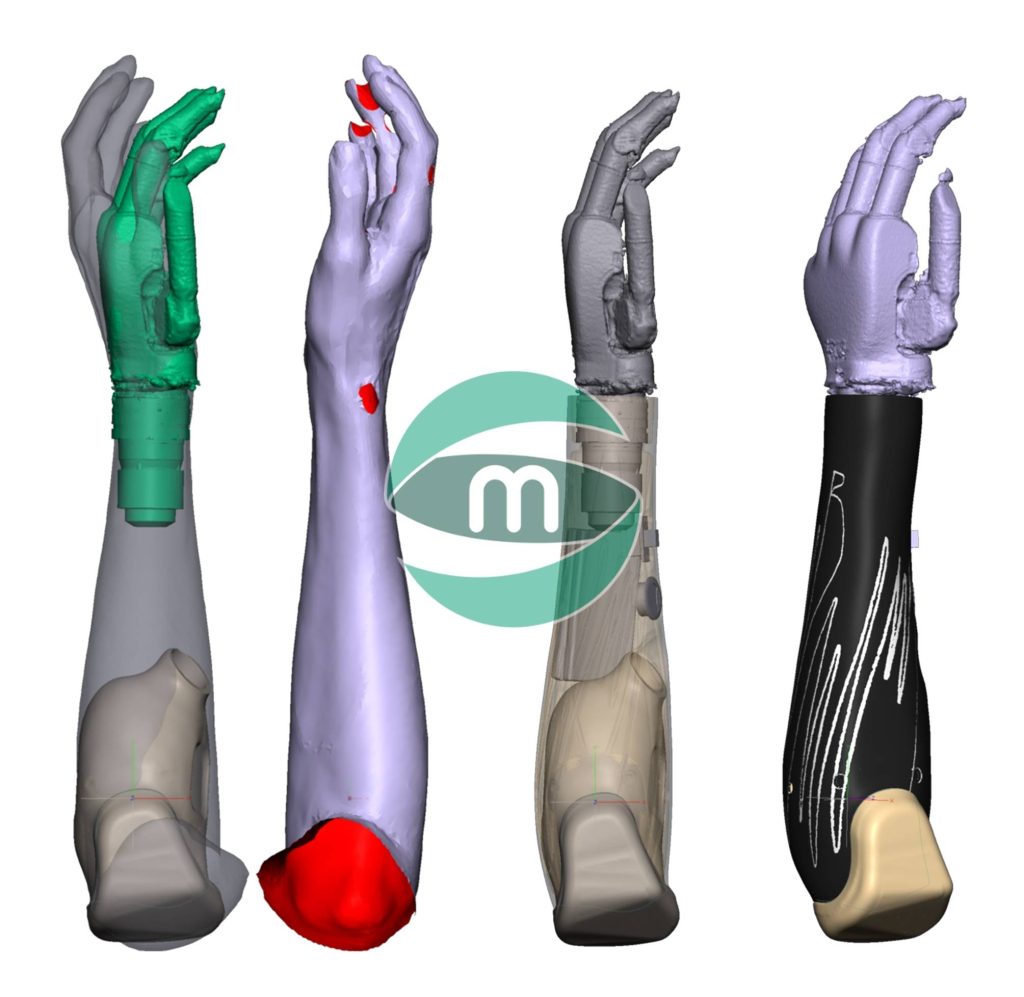
Capturing the body part alone is not enough to create a device that will attach to a human being. You must modify the captured shape using specific principles that conventional CAD tools, poorly suited to organic modeling, often cannot manage.
Outside proprietary ecosystems, some independent practitioners use solutions not originally intended for orthopedics, such as Geomagic Freeform by HEXAGON. Operated with a haptic arm, this software offers organic 3D sculpting similar to traditional manual work, with sensitivity and precision that mouse-driven systems cannot replicate. Freeform is highly versatile and used for custom orthopedics as well as complex medical applications: surgical guides, custom cranial implants, dental applications, and even prop creation for cinema.
Unbound by subscription models, Freeform provides a unique ecosystem that spans from sculpting to 3D print preparation in a single environment. It is an “apolid” alternative appealing to those who want independence while accessing a true organic design tool suited to human constraints. As an orthoprosthetist, I have not yet found a solution that could replace this software, partly because I have been using it for over 20 years.
In our profession, every part we make is unique. Each device is a specific case, a specific patient, a specific shape. Very early on, I saw 3D printing not as a fantasy but as a genuine opportunity to improve how we manufacture. Our constraints have increased dramatically: rising raw material costs, frozen reimbursement rates by social security, higher energy prices, supply chain disruptions, etc. Producing is becoming more expensive, while reimbursements shrink.
Many companies in the field therefore turned to additive manufacturing as a beacon of hope: reduced waste, better repeatability, more controlled processes, and a more reliable way to meet regulatory standards.
Contrary to what some expected, this promise was not empty. When I became interested in 3D printing in 2015, it was only an intuition. Between 2015 and 2020, and still today, the technology matured and became more accessible. We now have real, robust solutions for O&P.
So much so that in 2017, I seriously considered leaving my profession entirely to focus on additive manufacturing. It was ultimately my employer at the time, Pierre Chabloz, who dissuaded me… before offering me the chance to create an R&D department dedicated to these new technologies and to improving CAD/CAM in our profession.
When I became interested in 3D printing in 2015, it was only an intuition. (...) We now have real, robust solutions for O&P.
Marc Souply
That is when I met Jules Revais and Anousack Khounlavong, highly complementary, we formed a true “dream team”. Together we founded the Chabloz R&D lab, which later became Ottobock France’s R&D lab after Chabloz Orthopédie was acquired.
Our mission starting in 2017 was comprehensive: complete benchmarking of scanners and additive machines, selecting a versatile and accessible model, studying all additive manufacturing solutions, developing software tools for Ottobock, collaborating with startups on pressure sensors, and many more industrial projects. It was an intense period that truly structured the arrival of 3D printing in our profession.
When we began exploring additive manufacturing in 2017, our goal was clear: identify the most relevant technologies and materials for our profession. At that time, social security and the HAS (French Health Authority) had not yet set a framework for accepting 3D-printed devices.
Some colleagues were naturally drawn to polypropylene (PP), listed in the LPP (List of products and services) and well-known to practitioners. It had the advantage of being reimbursable, but its technical properties and productivity in 3D printing were limited compared to other materials we wanted to explore. To us, the debate was pointless: why get stuck on PP solely because of LPP coding?
It was a waste of time, we needed to move fast to be the first to master these technologies. There were more efficient materials; we needed to study them and then prove they were viable for producing external custom made medical devices.
We broadened our research to higher-performing materials like PA12, prioritizing powder for its mechanical properties and productivity. After testing various technologies and manufacturers, we selected HP’s MJF 4200, one of the first machines of this type used in France’s O&P sector (in the medical field generally, uncertain).
This choice prevailed over EOS, 3DSystems, and Prodways due to productivity, ease of use, integrated post-processing, and competitive cost. It was the result of extensive testing and exchanges with other users.
By 2017, we therefore had a robust solution capable of meeting the clinical and economic constraints of our profession while fully exploiting the potential of additive manufacturing. We then began developing new products specifically tailored to this technology.
Today at MakeSense, I continue exploring new materials from powder-bed, FFF, or SLA technologies. There is no universal solution in additive manufacturing: no single material can cover all our devices. We must start from patient needs and the device’s functional requirements, then select the right technology and material, and determine how to model it.
Personally, I am particularly fond of PA11 for its mechanical properties, biocompatibility, and above all its history (a French patent!), its biopolymer origin (castor oil), its environmentally responsible production chain (Pragati program), and its recyclability (Virtucycle). I am deeply committed to the eco-design of our products, so all this matters greatly.
As an orthoprosthetist, I quickly became aware of the physical and economic limits of our profession and the challenges involved in sustaining the quality of care. Today, we are able to produce custom devices, but I always ask myself: in twenty years, will we still be able to produce them at costs compatible with our healthcare system?
This concern for the future touches directly on the survival of our profession and the care of people with disabilities. That’s what led me to create my own company.
I founded MakeSense in February 2022, after leaving Ottobock on very good terms, with the goal of offering consulting, training, and subcontracted production. From the outset, sustainability was central and eco-design was at the heart of all my projects. With support from several universities (IMT Alès and UGA/GSCOP), we conducted life cycle analyses (LCA) comparing different fabrication methods for AFO-type walking orthoses: plaster, PU milling, thermoplastic or carbon, and PA11-printed devices (a MakeSense & UGA patent).
We also studied the aging and environmental behavior of these polyamide (PA) materials to ensure their reliability within the regulatory lifespan of the devices. These studies confirmed that PA materials show no degradation before the end of their usage period, whether exposed to UV, fresh water, or salt water. A guarantee for producing sports or leisure devices.
The LCAs showed a significant reduction in environmental impact on several criteria, except some impact categories that appear less critical.
More recently, work by Milan Exbrayat and Jules Revais on femoral sockets printed in multijet TPU and PA confirmed these benefits: compared with traditional devices, they offer superior sustainability. These studies show that additive manufacturing for custom medical devices is not only technically innovative, but also a real opportunity for the ecological and economic sustainability of our profession.
The LCAs showed a significant reduction in environmental impact on several criteria
Marc Souply
For me, the value of digital tools goes beyond precision and manufacturing efficiency, it translates directly into patient benefit. For upper-limb prostheses, for example, rejection rates remain high, around 27% according to some studies (some colleagues report even more). Traditional devices can be uncomfortable or aesthetically inadequate compared to the functional benefit they provide.
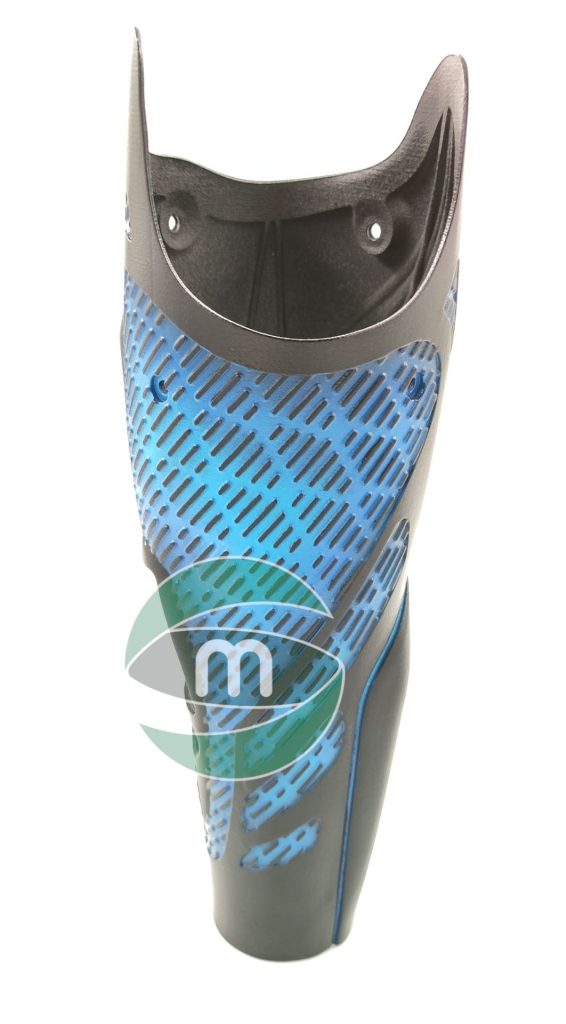
Thanks to digital tools, I can design devices that fit better, respect anatomy, and offer a more refined aesthetic. A prosthesis that meets a patient’s aesthetic expectations will inevitably be better accepted. (Studies have been conducted on this subject: see Corps et prothèses, Gourinat, Groud, Jarrassé, 2020, PUG.)
Including the patient (on non-medical aspects) in their device project is very important. It changes just one word in a sentence, but it can change everything: it’s no longer a prosthesis, but their prosthesis. And unlike lower-limb prostheses, upper-limb devices are not hidden, they are present in every social interaction.
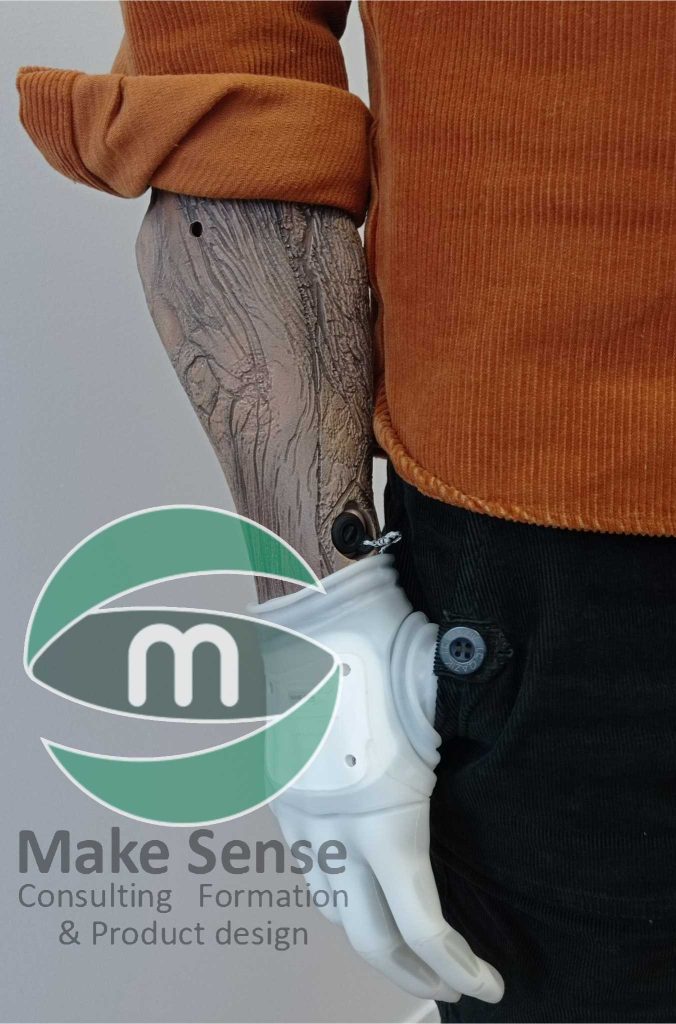
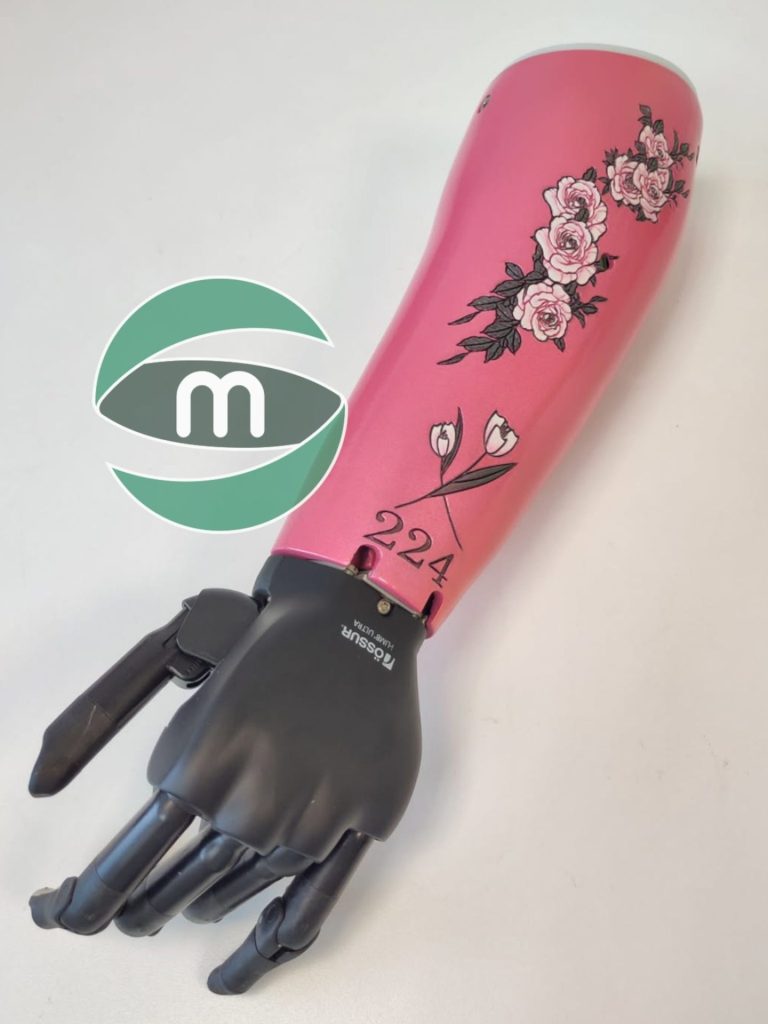
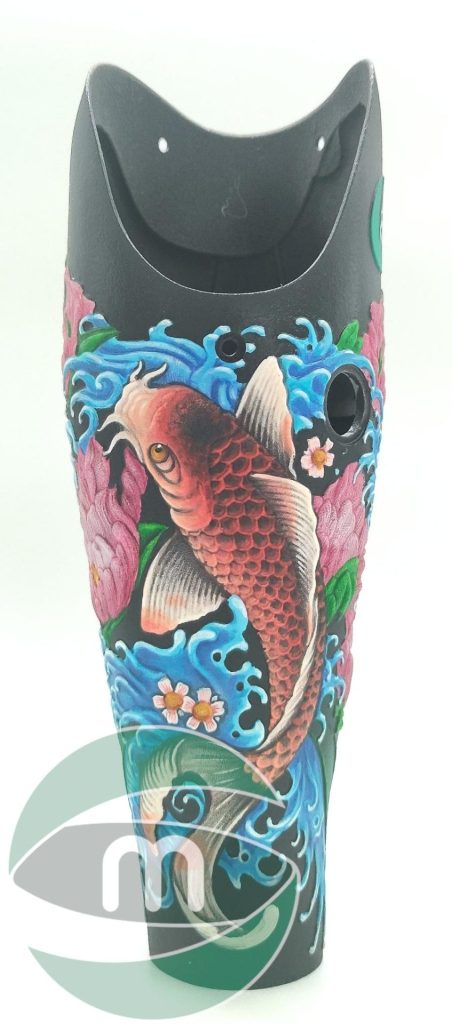
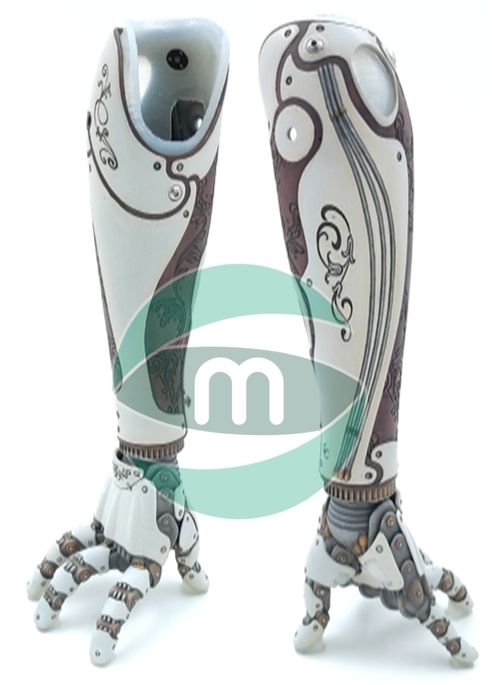
Beyond functionality, these tools also enable a level of personalization we cannot offer with traditional methods. Some patients choose motifs, textures, or work with their tattoo artist… and see their prosthesis become an object that reflects their identity. This strengthens acceptance and supports psychological reconstruction. Even though social security doesn’t cover cosmetic features, the human benefit is real: comfort, confidence, inclusion, and well-being.
What I love most is combining artistry and healthcare, the “Art-topedics” side of the job. As a student, I dreamed of cyberpunk-style prosthetics and transhumanism. Very quickly, reality caught up with me: I was delivering functional, compliant devices, but often unattractive, not as effective as hoped, and personally unsatisfying.
Today, with over twenty-five years of experience and modern technologies, I can create fully integrated, finely designed devices where aesthetics, functionality, and patient comfort converge from the beginning. This has been made possible by additive manufacturing and digital tools, which allow me to go far beyond what I once imagined, and to collaborate remotely with colleagues to support their patient care.
What also drives me is combining innovation with sustainability. With MakeSense, I can develop responsible solutions for the future of our profession and future generations. And beyond the technical and ecological impact, there’s personal satisfaction: I enjoy creating devices that make sense, not merely replicating what was traditionally made by hand. Technology is meaningful only when it enables something new, better designed, and better adapted to the patient.
However, I want to raise a current issue that sometimes discourages me: topics like med-tech and medical device sustainability are no longer popular. Investors swear only by AI. Yet initiatives that support sustainability and sovereignty in healthcare should be encouraged, health accounts for 9% of France’s national footprint (see Shift Project studies on healthcare decarbonization).
And let’s not forget: 850,000 people in France rely on our profession. I am not convinced that AI will one day care for disabled people in real life, nor that AI itself is truly sustainable in the next 30 years (but that is another debate!).
I think the coming years will be very exciting for upper-limb prosthetics. Young professionals who begin working on this field now have the time and energy to develop innovative, refined devices. Personally, I had the opportunity to work in an R&D department, collaborate with engineers, and experiment extensively with design and methodology before producing devices, experience I now share with them and through my consulting work.
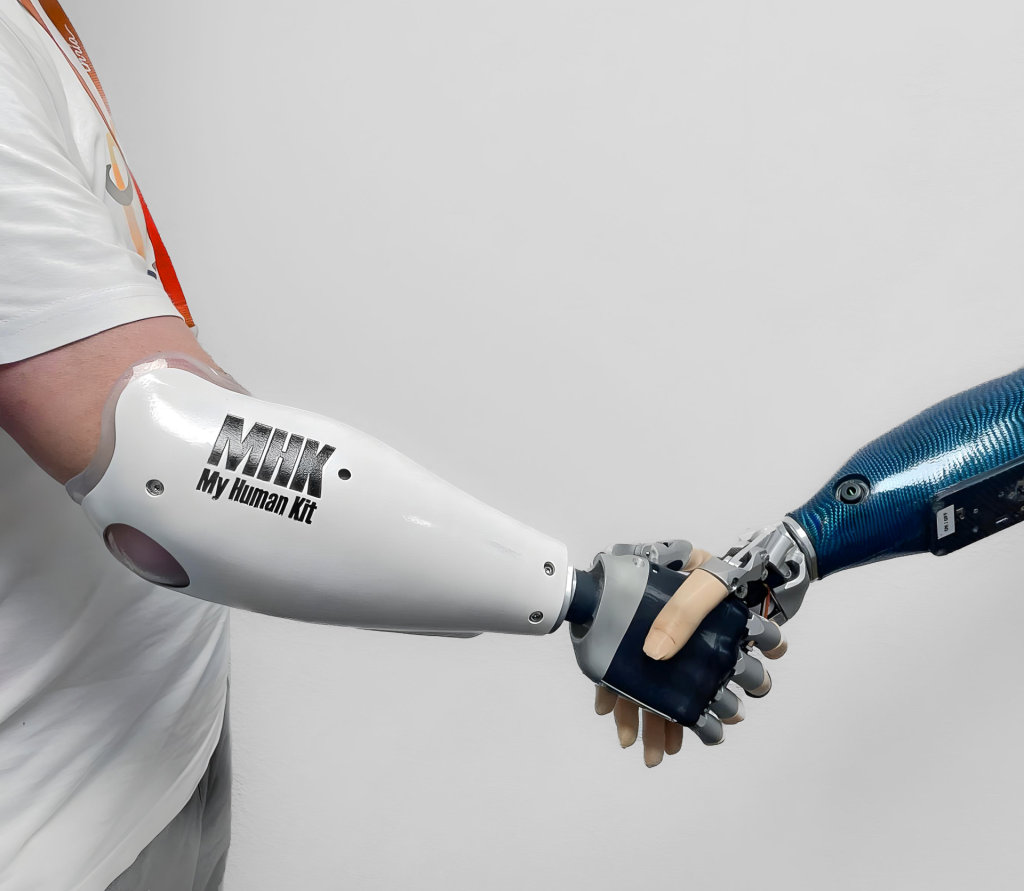
At the same time, initiatives like MyHumanKit are particularly promising. Their FabLab-based, open-source approach enables personalized device development. (Strictly speaking, they don’t produce prostheses but assistive devices, which is just as important.) From a regulatory standpoint, only orthoprosthetists are authorized to produce prostheses, but MHK’s approach makes devices more accessible and encourages innovation sharing among patients.
I have contributed to the production of test sockets and parts to help them provide products such as the BionicoHand to people interested in trying them. This shows how collaborative models can enrich our field and support patients in their daily lives. Practitioners don’t always have the time or funding for these projects, since they must focus on producing devices certified by social security. Of course, these assistive devices are not yet regulated, so we must ensure they are used in conditions where the patient (or others) is not put at risk. In Europe, they cannot replace an external DMSM (dispositif medical sur mesure) due to strict health regulations.
Another point, which applies beyond upper-limb devices:
In my opinion, the future does not lie in every orthoprosthetist purchasing their own industrial machines. Manufacturing medical devices through additive processes is complex: it requires trained staff, appropriate facilities, regular maintenance, and rigorous material controls. Centralized production, by industrial partners or specialized companies like Sculpteo, seems much more relevant for industrial printers, which are true production tools, not prototype-oriented equipment. This approach enables shared resources, economies of scale, quality assurance, and sustainability, while respecting the economic constraints of our sector.
To summarize, I see a future where additive manufacturing and digital technologies are deployed collaboratively, where independent and specialized actors pool their resources and expertise to support the entire profession. This is how we can continue innovating while remaining accessible and economically viable for both patients and practitioners.
That said, each practitioner is free to invest in specific additive technologies for producing assistive devices or workshop accessories. And if these technologies fascinate you as much as they fascinate me, go for it, learn everything you can. It will require personal time investment, but it will be invaluable in both your professional and personal life.
Get the latest 3D printing news delivered right to your inbox
Subscribe to our newsletter to hear about the latest 3D printing technologies, applications, materials, and software.
Connect with Google
Connect with Facebook