3D Learning Hub

3D Printed enclosures: Custom solutions for every Industry

Introduction

Creating enclosures whether for medical devices, electronics, or industrial systems often involves complex design, testing, and production processes. But with 3D printing, you can simplify and accelerate each step. From concept to finished product, additive manufacturing empowers engineers and designers to create durable, lightweight, and perfectly tailored enclosures.

In this article, we’ll explore how 3D printing enables the creation of custom enclosures for multiple sectors, including 3D printed medical device enclosures and electronic housings. You’ll learn how the technology boosts innovation, scalability, and adaptability and discover real-world applications from companies leveraging digital manufacturing to improve lives.

And if you need some help to manufacture your parts, Sculpteo’s 3D printing service might be the perfect solution to get it 3D printed.

Why 3D Printing is ideal for custom enclosures

Adaptability 

The freedom offered by additive manufacturing has almost no limits. Creating snap fits, interlocking joints, threaded fasteners, and living hinges are all possible when 3D printing enclosures. Adapt your housings with all the functionalities you’ve envisioned for them. 3D printing provides a level of design flexibility that traditional injection molding simply can’t offer.

With a mold, you can’t easily modify your design any change means starting from scratch. But with additive manufacturing, you only need to update your 3D file. It won’t interrupt your production, giving you reactivity and the ability to adapt quickly to new needs without losing time or money.

Using 3D files also ensures long-term design flexibility. You can implement modifications anytime, making your process more agile and cost-efficient.

Moreover, mass customization is one of the biggest advantages of additive manufacturing. You can adapt each design to your customer’s needs and it won’t cost more to produce several versions of the same 3D printed enclosure.

Innovation

Additive manufacturing gives you the freedom to innovate and push your projects further. Instead of designing around manufacturing limits, you can design around your ideas. Feel free to experiment and build what you want to create not just what traditional methods allow you to create.

With 3D printing, you can integrate multiple functionalities directly into your enclosure or device, resulting in more efficient and compact products.

Speed your processes

Accelerating your workflow helps your business grow. When designing a custom enclosure, the ergonomics and aesthetics are as important as the technical features. With 3D printing, you can quickly produce complex shapes and functional prototypes without any tooling or molds keeping production fast and costs low.

Because 3D printing costs are based on material volume, not batch size, multiple iterations of your design remain affordable. This makes it a reliable and sustainable manufacturing method compared to traditional production.

Thanks to 3D printed prototypes, you can evaluate ergonomics, assembly, and fit before final production. And with a wide range of 3D printing materials, you can test both the performance and the visual appearance of your design.

Ultimately, additive manufacturing is the perfect choice for producing plastic enclosures that require customization or just-in-time manufacturing. The benefits for your business are clear: faster production, better design freedom, and reduced costs.

3D Printed medical device enclosures

Medical device enclosure

Healthcare technology increasingly relies on compact and durable housings for sensitive equipment. 3D printed medical device enclosures can be customized to fit specialized components, offer biocompatible or flexible materials, and withstand demanding environments like hospitals or home care.

3D printing enables the creation of sleek, lightweight casings for medical monitoring tools, assistive communication devices, and portable diagnostic systems. This flexibility helps healthcare innovators reduce time-to-market while maintaining the safety and reliability expected in medical-grade products.

Case study : JIB Eye

3D printing can do more than speed up production it can change lives. The French company JIB used Sculpteo’s 3D printing service to develop a custom medical device enclosure for JIB Eye, a communication aid for people with severe motor disabilities.

Using Ultrasint® TPU01 and Multi Jet Fusion (MJF) technology, JIB created a lightweight, durable, and flexible casing that safely combines an eye camera and tablet. The enclosure protects the device from shocks and drops while remaining comfortable for daily use.

“Sculpteo’s expertise in digital manufacturing has allowed us to develop tailor-made solutions for people with motor disabilities,”
Benoît Debaecker, Operations Director at JIB

Developing your own custom electronic enclosures

What 3D printing material should you choose? 

What is the best enclosure material? To develop your project and start creating your 3D design, you will have to choose your material and take into account its design guidelines. If you are using a filament 3D printer, then PLA, PETG, or ABS become options to create your enclosure. But your electronic project might present some requirements and better mechanical properties to create an even more durable 3D printed enclosure. 

Plastic electronic enclosures can be developed using additive manufacturing with adapted materials. To create these plastic enclosures, 3D printing materials such as Nylon PA12 or Nylon PA11 will be especially suitable for your project. These are two cost-effective material options that can be used to manufacture your prototypes, small or big series.

If your enclosure needs ESD (Electrostatic Discharge) protection often required for sensitive electronic components you should consider dedicated ESD-safe materials. For filament-based printing, PETG ESD offers a good balance of strength, printability, and electrostatic protection. For powder-based technologies, Ultrasint® PA11 ESD combines the robustness of PA11 with reliable ESD performance, making it ideal for industrial-grade electronic housings.

By selecting a material that aligns with your technical requirements mechanical strength, durability, or ESD safety you can ensure that your 3D printed enclosure meets both functional and environmental constraints.

How to design enclosures for 3D printing?

It is really helpful to design the component around what you want to enclose before modeling the enclosure. In that way, you can place the components, check that everything fits and it will be easier to determine the clearance for the connectors or the cables afterward. To be sure that your components will fit, we recommend keeping a 0.5 mm clearance between components and 3D printed features.

Fitting Enclosure

Access to the component

The first thing to think of when designing an enclosure is what you will put in it and how you will access it. If you do not need to have access to your components, you can design specific fastening components or use adhesives to seal your enclosure permanently.

In the case where you want to have access to your components, there are many closing systems you can use:

  • Semi-rigid lugs
  • Sliding faces
  • Screws
  • Classic and Living hinges
  • Assembly

Hinge Enclosure

Lugs, cut-outs and lips, help with the assembly and parts alignment. Moreover, these features are great to strengthen your enclosure if you respect the minimum dimensions of such features. Check the design guidelines of your chosen material for more information. Learn how to connect two parts with 3D printing, in our dedicated article.

Rib Lugs Enclosure

Rib Enclosure

The solidity of the 3D printed enclosure

The wall thickness of your enclosure is a major thing to consider. It determines the weight, rigidity, solidity, and possible applications of your enclosure. Even if our machines can print smaller details and walls, we recommend you to respect a minimum wall thickness of 2 mm. This value ensures a structural solidity with a very light weight. Once again, check the design guidelines of your material to adapt this thickness.

Wall Thickness Enclosure

Be careful however depending on the length of your enclosure, a 2 mm wall thickness can give a certain flexibility to the walls and can cause some shrinkage.

A fillet is a key feature in 3D printing because hard angles may not be properly 3D printed. Fillets in enclosures are really important both in the inside and the outside.

Fillet Fillets avoid sharp angles and reduce the stress

Outside of your enclosure, soften your corners with very small fillets (1 or 2 mm).

Inside your enclosure, the corners can be strengthened with bosses and fillets. A very small radius facilitates 3D printing and reduces the stress concentration on corners.

Bosses Bosses with fillets on the inside allow to reduce the stress around a hole

3D printing enclosures: quality and accuracy

If your design contains screw holes or fastener clearance holes, be sure that your material is accurate enough. With our 3D printed plastic, the accuracy is very high but to obtain more precise holes, it is recommended to drill or tap them afterward with machining tools.
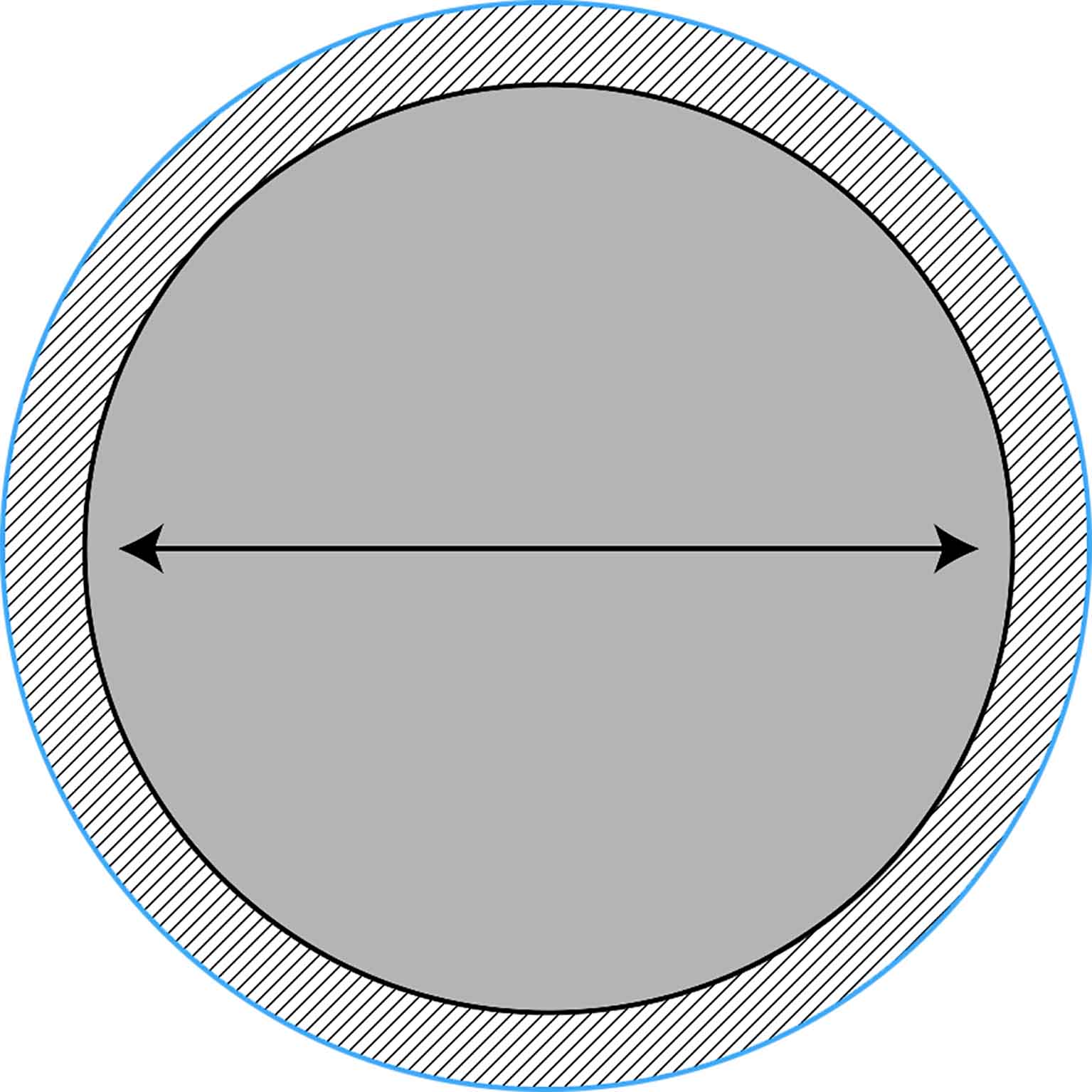
HoleExternal Slightly expand the diameter of screw and fastener clearance

 HoleInternal On the other hand, reduce the diameter of the holes where you want the screw or fastener to bite into the case

To learn more about threading in 3D printing, you can check this article.

In enclosures, small walls and thin features are often added to keep components in place. These features have to respect the minimum thickness of your material but in addition, we suggest adding structure features like gussets or ribs that will give strength to your element and help it to be 3D printed correctly.

Gussets or ribs reduce stress, strengthen thin features and reinforce the case Gussets or ribs reduce stress, strengthen thin features and reinforce the case

Finally, remember that you can iterate really fast but it is also possible to go into production with 3D printing for your enclosures. Many of our customers have already tried our online 3D printing service to go into production for their enclosure

Are you looking for a 3D printing service?

Don’t wait any longer and make the most of Sculpteo’s experience. Our team if here to support you if you need help. If you already have your 3D file, you can upload it, select your metal material and get your free instant quote.

Get the latest 3D printing news delivered right to your inbox

Subscribe to our newsletter to hear about the latest 3D printing technologies, applications, materials, and software.