
Login
If you have any trouble logging in to your account, contact us.
Sign Up
To start 3D printing or Laser Cutting, you'll need to create an account here. Once done, you'll be able to upload your files and get live quotes of yours parts
Already have an account? Log In
Home » 3D printing by industries » 3D-printed orthotic insoles: Personalized comfort at your feet
3D-printed orthopedic insoles offer precise customization, durability, and faster production than traditional insoles.
Sculpteo provides advanced, skin-safe materials like TPU, PA11, and PA12 for medical-grade custom insoles.
Professionals can automate insole production with Sculpteo’s API, streamlining orders and reducing errors.
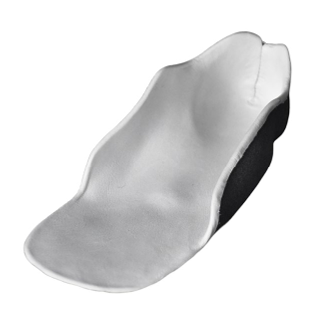
Orthopedic insoles have long been a solution for people struggling with foot pain, posture issues, or sports injuries. But traditional insoles often fall short in terms of personalization and long-term comfort. Today, 3D-printed orthopedic insoles are transforming how patients, athletes, and professionals take care of their feet. At Sculpteo, we make this revolution possible with advanced materials, digital workflows, and on-demand production.
Orthopedic insoles, also known as orthotic insoles, are medical devices designed to correct posture, relieve pain, and improve walking or running efficiency. They can address conditions such as flat feet, plantar fasciitis, or joint stress caused by poor foot alignment.
Traditionally, orthopedic insoles have been crafted manually by podiatrists and orthopedic technicians a process that relies heavily on skill and experience. After a patient’s foot is examined, the podiatrist takes an impression right after physical activity, when the natural shape and pressure points of the foot are most accurate. From this footprint, a technician builds the insole by hand, layering and gluing various materials such as foam, cork, or EVA onto a base. Each element is then shaped, sanded, and adjusted to achieve the desired level of support and comfort.
This traditional method is highly manual, and while it can be relatively quick compared to thermoforming or molding, it also comes with limitations. The precision depends on the artisan’s expertise, reproducibility is low, and every adjustment requires physical rework. Fine control over geometry, thickness, and internal structure is nearly impossible, which makes achieving consistent results at scale challenging.
That’s where 3D printing, and particularly Sculpteo’s digital manufacturing workflow, truly changes the game offering repeatable, data-driven precision and full customization without the drawbacks of manual fabrication.
Traditional insoles often rely on manual processes, where adjustments require additional labor and cost. 3D printing, on the other hand, introduces a digital-first approach:
Accuracy: Based on a 3D scan of your foot, every insole is designed to fit perfectly.
Speed: Once the digital model is ready, manufacturing takes days instead of weeks.
Scalability: Designs can be updated or reprinted on demand without repeating the entire process.
With additive manufacturing, orthopedics moves from a “one-size-fits-all” model to truly personalized medical devices.
The shift to digital manufacturing isn’t just about novelty it brings measurable benefits:
Full Customization – Insoles can be adapted to foot shape, body weight, thickness, and lifestyle.
Lightweight but Strong – 3D-printed designs use lattice structures that reduce material while preserving strength.
Biocompatible Materials – At Sculpteo, we use polymers like PA11 and PA12, certified for skin contact.
Eco-Efficient Production – Additive manufacturing minimizes waste compared to subtractive methods.
Fast Iteration – Need adjustments? The digital model can be tweaked and reprinted seamlessly.
For patients, this means faster relief and optimal comfort. For professionals, it means a more reliable workflow, simplified storage of files and components, and flexible production scheduling.
The digital workflow behind orthopedic insoles typically follows these steps:
Instead of messy plaster casts, a 3D scan captures the foot’s geometry with sub-millimeter precision.
Specialized CAD software transforms the scan into a parametric insole design. This step allows podiatrists to adjust arch height, cushioning zones, or corrective angles.
Using Sculpteo’s industrial-grade printers, the design is transformed into a physical insole. Both Selective Laser Sintering (SLS) and HP Multi Jet Fusion (MJF) technologies are ideal for orthotics.
At Sculpteo, additional surface treatments can improve comfort and durability. These finishing options phase ensures a professional, ready-to-use result.
German medical O&P specialist Schlather GmbH turned to 3D printing with Sculpteo to create lighter, thinner, and fully customized orthopedic insoles and 3D printed orthoses for children. Using HP Multi Jet Fusion with polypropylene, they achieved mass-customization, improved comfort, and faster on-demand production.
For professionals managing high volumes of custom orthotics, efficiency is as important as precision. That’s why Sculpteo provides advanced medical printing services, including API services that allow you to integrate 3D printing directly into your own systems.
With our API, you can:
Securely upload 3D foot scan files from your ERP, CRM, or internal platform.
Configure models automatically, adjusting thickness, materials, and finishes.
Instantly generate quotes and place an order directly from your own tools.
Track production status in real time for faster turnaround and reliable completion.
This automation eliminates repetitive manual tasks, reduces human error, and accelerates insole production workflows. Sculpteo’s API ensures smooth storage of files, faster production, and more consistent quality.
Material choice is central to the performance of 3D-printed orthopedic insoles. At Sculpteo, we recommend three main options depending on flexibility and biomechanical needs:
TPU (Thermoplastic Polyurethane):
Ideal for flexible, shock-absorbing insoles. With elasticity and UV resistance, it provides long-lasting comfort.
Sculpteo options: Ultrasint® TPU 88A (white, SLS) and Ultrasint® TPU01 (grey, MJF).
PA11 (Polyamide 11):
A durable and biocompatible nylon derived from castor oil. Perfect for medical-grade orthotics requiring skin safety.
Sculpteo options: PA11 HP and Ultrasint® PA11.
PA12 (Polyamide 12):
Strong, versatile, and biocompatible. Often used as a substitute for injection-molded plastics, making it a reliable choice for structural support.
Sculpteo option: Nylon PA12 via SLS, HP Jet Fusion PA12 S or PA12.
Each material provides a balance of rigidity, flexibility, and biocompatibility, depending on patient needs.
At first glance, 3D-printed orthopedic insoles may seem more expensive than traditional ones. But when you consider durability, customization, and patient satisfaction, they often prove more cost-effective.
Traditional insoles: require frequent replacements, limited customization.
3D-printed insoles: perfect fit, scalable production.
From diagnosis to final production, 3D-printed orthopedic insoles are reshaping the world of orthotics. Patients gain personalized comfort and faster solutions, while professionals access a scalable, efficient workflow.
Beyond human healthcare, 3D printing for animals is opening new possibilities in veterinary medicine. From prosthetics for injured limbs to supportive accessories, additive manufacturing allows veterinarians to create custom devices that improve mobility, comfort, and quality of life for animals.
At Sculpteo, we combine advanced materials like TPU, PA11, and PA12 with cutting-edge 3D printing technologies to deliver medical-grade insoles on demand. Whether you’re a podiatrist, a sports clinic, or an innovator in healthcare, 3D printing is the path forward.
The future of orthopedics isn’t just digital it’s 3D printed.
3D-printed orthopedic insoles are custom orthotics made using additive manufacturing to improve comfort, posture, and foot health
It depends. 3D printed ones offer precise customization, faster production, durable materials, and improved fit compared to traditional methods
Common materials include TPU for flexibility, PA11 for skin-safe medical use, and PA12 for strong structural support
Costs vary, but they are often more cost-effective long-term due to durability, customization, and reduced replacement frequency
Yes. With Sculpteo’s API, professionals can automate file uploads, quotes, and orders, streamlining orthotics production
Get the latest 3D printing news delivered right to your inbox
Subscribe to our newsletter to hear about the latest 3D printing technologies, applications, materials, and software.
Connect with Google
Connect with Facebook