
3D Learning Hub

O&P Software: Digital tools for Orthotics & Prosthetics

Key Takeaways

  • O&P software connects patient assessment, 3D scanning, rectification, and production, replacing plaster workflows with faster, traceable digital chains.
  • Only a handful of platforms (such as Canfit, Vytruve, Spentys, and NiaFit) have become widely used because they focus on rectification, repeatability, and clinical logic.
  • Independent sculpting tools like Geomagic Freeform offer unmatched organic modeling for complex anatomy while keeping practitioners free from closed ecosystems.
  • Industrial partners like Sculpteo help O&P clinics turn digital designs into reliable PA11, PA12, or TPU devices without investing in heavy production infrastructure.

    Introduction

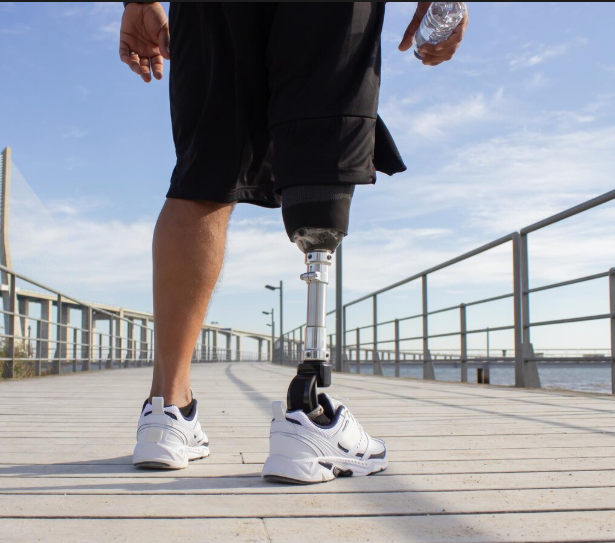
    Prothese jambe

    Orthotics and prosthetics revolve around custom‑made medical devices: every orthosis or prosthesis is unique, built for one specific patient and regulated as a custom device under strict medical rules. This uniqueness demands advanced clinical assessment, biomechanical understanding, and design tools that respect the complexity of the human body rather than treating it like a simple mechanical part.

    As orthoprosthetist Marc Souply explains, digitization 3D scanning, CAD/CAM, and 3D printing has value only when it helps professionals spend more time with patients, improves comfort and function, and fits within realistic economic models for reimbursed care. From legacy proprietary systems to flexible, additive‑ready platforms, O&P software is now central to both clinical practice and practice management

    The foundations of digital O&P software

    From plaster rooms to parametric CAD

    Salle de platre orthese

    Early O&P CAD/CAM systems emerged to solve very practical problems, such as the difficulty and danger of manipulating large plaster casts for rigid spinal orthoses. Companies like Vorum/Canfit, Orten, and Rodin introduced parametric software that allowed practitioners to start from standard shapes, enter measurements, and deform meshes as if sculpting plaster, but in a cleaner, lighter, more repeatable environment.

    These tools were linked to CNC milling machines that carved foam models, reducing physical strain on technicians and making it easier to document and reproduce successful designs for future patients. This marked a first step toward industrialized workflows in a profession that had historically been craft‑based.

    Why only a few platforms became standard

    Despite many attempts, only three or four systems truly achieved widespread adoption, largely because they provided intuitive mesh manipulation and rectification workflows tuned to clinical logic rather than generic CAD features. Rectification, the process of adjusting captured anatomy to achieve pressure relief, control points, and alignment is the heart of O&P design, and conventional mechanical CAD tools were poorly suited for this kind of organic modeling.

    At the same time, these platforms often came as closed ecosystems with proprietary formats, subscriptions, and limited interoperability, creating frustration when clinics tried to connect them to scanners, practice‑management systems, or external manufacturing partners. Many practices therefore began seeking more open, flexible solutions that could integrate with scheduling, billing, inventory, and clinical documentation tools.

    New‑generation O&P software: specialized and additive‑ready

    Modern O&P software is more modular: some tools focus on specific device families or workflows, while others specialize in automation or independence from vendor ecosystems. 

    Vytruve: alignment and socket productivity

    Vytruve logo

    Vytruve is an O&P‑specific productivity platform that provides a full scan, rectify, align, print workflow, particularly strong for lower‑limb prosthetic sockets

    Strength

    • Alignment tools with a database of over 150 prosthetic feet and multiple knees from brands such as Össur, Ottobock, and Blatchford, pre‑aligned according to supplier data.

    • Scan comparison features to track residual‑limb volume changes in centimeters or percentage, helping with liner choice and follow‑up.

    • Designed for 3D‑printed check and definitive sockets, eliminating plaster and enabling consistent, filament‑based additive fabrication.

    Limitations

    • Primarily focused on prosthetic sockets, so it is less of an all‑round solution for spinal or complex orthotic devices.

    • Best results depend on specific scanning tools and carefully defined protocols, which can require training and equipment investment.

    Canfit (Qwadra): the rectification tool

    Qwadra logo

    Canfit, now part of Qwadra’s digital portfolio, is one of the longest‑standing rectification platforms dedicated solely to O&P. It covers a wide range of devices from cranial helmets to AFOs (Ankle-foot orthoses) and sockets, translating more than 30 years of practitioner feedback into a robust user interface.

    Strength

    • Built specifically for orthotics and prosthetics, with tools to clinically rectify scans and measurements and completely design custom devices.

    • Compatible with multiple scanners and CAM workflows, allowing clinics to integrate it with existing milling or printing equipment.

    • Backed by Qwadra’s broader ecosystem, which offers scanning apps, foam technologies, and training to support “head‑to‑toe” digitalization.

    Limitations

    • Proprietary ecosystem and licensing require careful budgeting within fixed reimbursement schedules.

    • Advanced features like cranial symmetry tools and AFO toe‑box automation demand time and training before teams can fully exploit them.

    Spentys: workflow automation for scale

    Spentys logo

    Spentys is a cloud platform that accelerates the design and fabrication of 3D‑printed orthoses through a guided scan‑model‑print workflow. It targets both hospital emergency departments and orthopedic technicians, emphasizing speed and documentation.

    Strength

    • Three‑step Scan → Model → Print process that replaces plaster casting and converts hours of modeling into minutes through automation and STL generation.

    • Integrated quality‑control checkpoints, labeling, and export tools that support consistent output and reduce manual errors.

    • Proven to help clinics double technician output (e.g., from 16 to 32 molds per day) while enabling comfortable, quickly produced orthoses.

    Limitations

    • Automation and template‑driven design mean less fine, artistic control than organic sculpting tools for very atypical anatomies.

    • Strong focus on orthoses; full prosthetic workflows may require complementary software or external partners

    NiaFit: iterative, clinician‑led CAD

    NiaFit, within Nia Technologies’ PrintAbility ecosystem, adopts a non‑destructive, non‑linear CAD approach that mirrors traditional O&P reasoning rather than generic CAD logic. It allows clinicians to revisit decisions and modify shapes without breaking the workflow, aligning with how many practitioners already think.

    Strength

    • Iterative rectification and modification support educational use and everyday clinical adjustments, reducing fear of making irreversible mistakes.

    • Developed specifically for O&P devices, so tools, templates, and language correspond to real clinical tasks rather than mechanical engineering jargon.

    • Integrated into a broader implementation framework with training and process design, helping clinics build complete digital toolchains.

    Limitations

    • Smaller installed base and ecosystem than long‑standing platforms, which can limit peer‑to‑peer support and integration options.

    • Best leveraged within its native ecosystem; standalone use may require additional development or IT support to connect with other systems.

    Geomagic Freeform: independent, anatomical sculpting

    Organic modeling with haptic feedback

    Geomagic Freeform logo

    Geomagic Freeform is an organic 3D sculpting environment powered by a haptic arm, allowing users to feel the surface as they work, like digital clay modeling. This tactile feedback is especially valuable for orthoprosthetists used to modifying plaster models by hand, because it preserves their intuitive sense of pressure zones, reliefs, and contours.

    Freeform is widely used for custom medical applications: prosthetic and orthotic shells, surgical guides, cranial implants, dental parts, and even cinematic props, making it a versatile tool that extends beyond traditional O&P CAD.

    Independence and workflow freedom

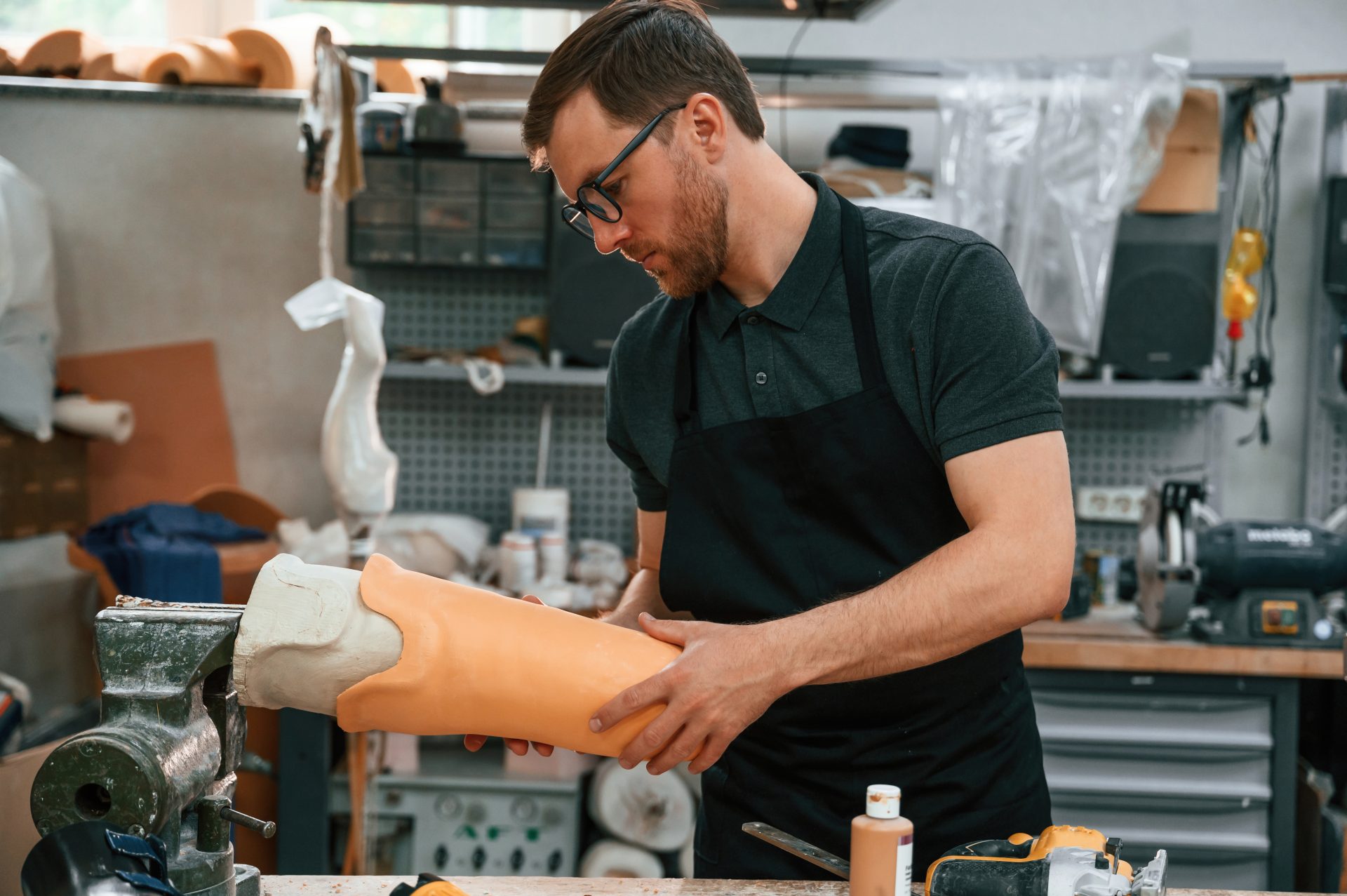
    praticienne orthese prothese

    Unlike many vertical O&P platforms, Freeform is not tied to proprietary scanners or subscription ecosystems; users can import meshes from various sources, sculpt freely, and export files for milling or 3D printing. For practitioners, this independence enables them to adapt workflows, develop their own templates, and collaborate with industrial partners such as Sculpteo without being locked into one vendor’s roadmap.

    The trade‑off is that Freeform is powerful but demanding: it requires digital craftsmanship, familiarity with mesh topology, and thoughtful integration into clinical and regulatory processes to ensure that designs remain safe and traceable.

    It is powerful, but requires expertise, digitization must remain a tool at the service of practitioners, enabling better patient outcomes rather than replacing clinical judgment.

    Choosing O&P software with professional and manufacturing support

    Regulatory, clinical, and material responsibility

    Because each device is a regulated custom‑made medical device, poor rectification or inappropriate CAD decisions can lead to discomfort, complications, or non‑compliance. Software must therefore support safe deformation of anatomical shapes, validated templates, versioning, and audit‑ready documentation that proves why design choices were made.

    When additive manufacturing is used, design choices also interact with materials: PA11, PA12, and TPU each present different stiffness, flexibility, fatigue behavior, and biocompatibility profiles. Layer orientation, local thickness, lattice structures, and post‑processing all influence how the final orthosis or prosthesis will behave over its regulatory lifespan.

    The pressure on reimbursement, frozen tariff structures, and economic constraints means that digital transformation must improve operational efficiencies, reduce manual paperwork, and support predictable reimbursements.

    Centralized production with partners like Sculpteo

    Marc Souply argues that it rarely makes sense for every orthoprosthetist to buy and maintain industrial 3D printers, because medical‑grade additive manufacturing requires trained staff, controlled facilities, and strict material management. Instead, centralized partners such as Sculpteo provide access to HP Multi Jet Fusion and other industrial technologies, along with validated material workflows, ensuring reproducible, compliant parts.

    This collaborative model lets clinics benefit from advanced additive manufacturing while focusing on what they do best: clinical assessment, rectification, fitting, and patient support, rather than machine maintenance and process validation.

    Conclusion

    O&P software has become a cornerstone of modern orthotics and prosthetics, linking human expertise with powerful digital tools to create safer, more comfortable, and more sustainable custom devices. Whether clinicians rely on platforms like Canfit, Vytruve, Spentys, NiaFit, or the sculptural freedom of Geomagic Freeform, success now depends on combining robust software, sound clinical judgment, and reliable manufacturing partners.

    With industrial‑grade materials, validated additive workflows, and experience supporting orthoprosthetists worldwide, Sculpteo helps transform well‑designed digital models into durable devices that make a difference in patients’ daily lives.

    accurate modeling, traceable decisions, validated templates, safe anatomical deformation, and secure documentation workflow.

    People Also Ask

    What does “O&P software” mean?

    How does 3D printing integrate into O&P workflows?

    Is specialized O&P software better than general CAD?

    Do clinics need their own industrial 3D printers?

    Get the latest 3D printing news delivered right to your inbox

    Subscribe to our newsletter to hear about the latest 3D printing technologies, applications, materials, and software.