
Login
If you have any trouble logging in to your account, contact us.
Sign Up
To start 3D printing or Laser Cutting, you'll need to create an account here. Once done, you'll be able to upload your files and get live quotes of yours parts
Already have an account? Log In
Home » 3D printing by industries » 3D Printed Cranial Remolding Orthosis
The Orthotics & Prosthetics (O&P) industry is experiencing a digital revolution, and one of its most significant advances lies in the field of plagiocephaly treatment. Cranial remolding orthoses (CROs), traditionally produced through plaster casting and thermoforming, required extensive manual labor and could introduce variations between devices. Today, 3D printing enables clinicians to achieve perfect fit, precision, and repeatability through a seamless digital workflow.
At Sculpteo, we provide ISO 13485 certified additive manufacturing solutions tailored for medical applications. By combining advanced 3D printing technologies, biocompatible materials, and validated processes, we help healthcare professionals deliver comfortable, safe, and effective treatments for infants with cranial asymmetry.
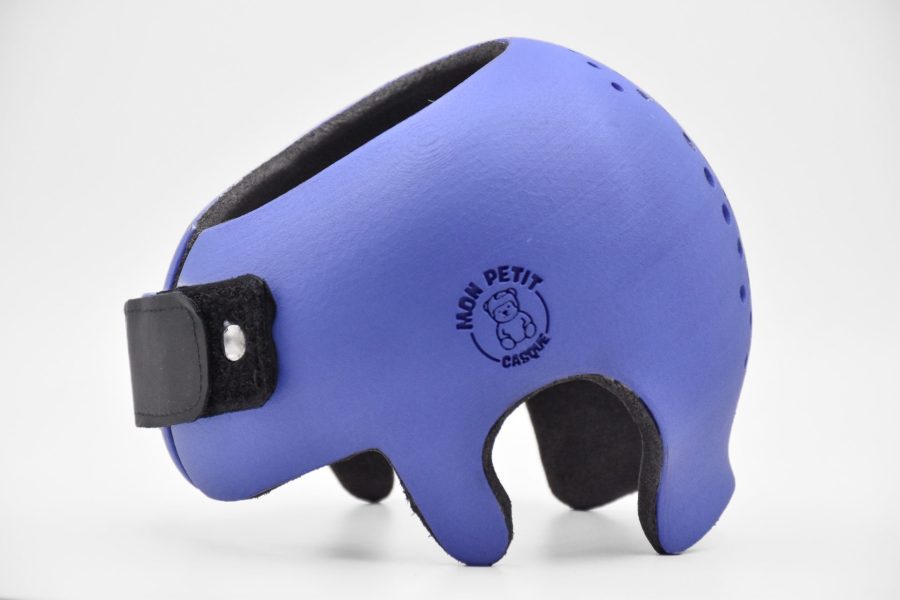
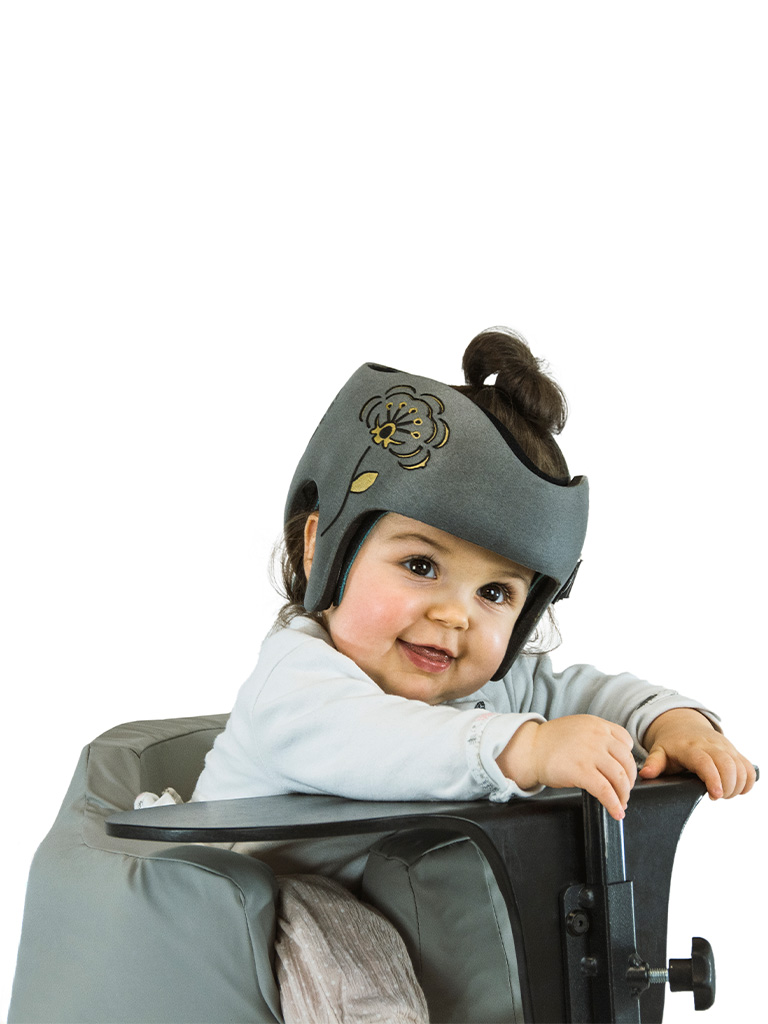
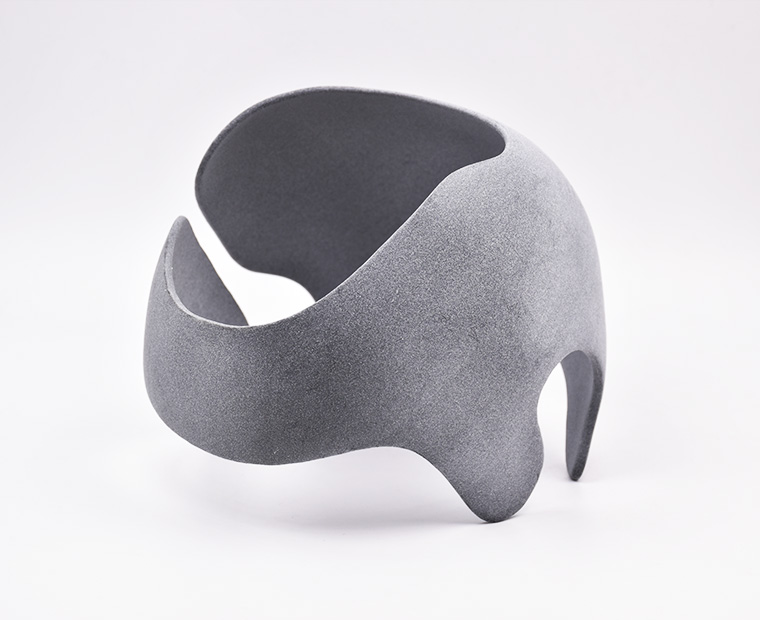
A cranial remolding orthosis is a customized medical helmet used to correct cranial asymmetries such as plagiocephaly and brachycephaly. The device applies gentle pressure to prominent skull regions while leaving room for flattened areas to expand, guiding natural growth toward symmetry. Since infants wear these helmets for nearly 23 hours a day, material choice, ventilation, and surface quality are critical factors affecting both comfort and hygiene.
Traditional foam or thermoformed helmets often trap heat and require frequent modifications. With 3D-printed CROs, digital production allows precise geometry and lighter, more breathable structures. This translates into improved comfort for infants and fewer adjustments for clinicians making the entire treatment process more efficient.
Digital workflows have fundamentally changed helmet therapy. Instead of plaster molds, clinicians now use high-resolution 3D scans to capture cranial geometry within minutes. The digital model can be corrected directly in CAD software and sent for production through additive manufacturing technologies like Selective Laser Sintering (SLS) or Multi Jet Fusion (MJF).
This scan-to-print process shortens lead times, eliminates manual errors, and produces helmets with consistent mechanical properties and fit. It also integrates seamlessly into modern O&P practices, enabling standardized, traceable production while maintaining flexibility for customization. Sculpteo’s oline printing servie makes this process accessible to clinics of all sizes, ensuring both efficiency and compliance.
One of the key advantages of 3D printing is the ability to precisely control wall thickness and geometry, enabling lightweight designs without compromising strength. This weight reduction is especially important for infant cranial remolding orthoses, where comfort directly impacts treatment compliance.
Heat buildup is frequently cited by clinicians as a factor that can negatively affect wear time.
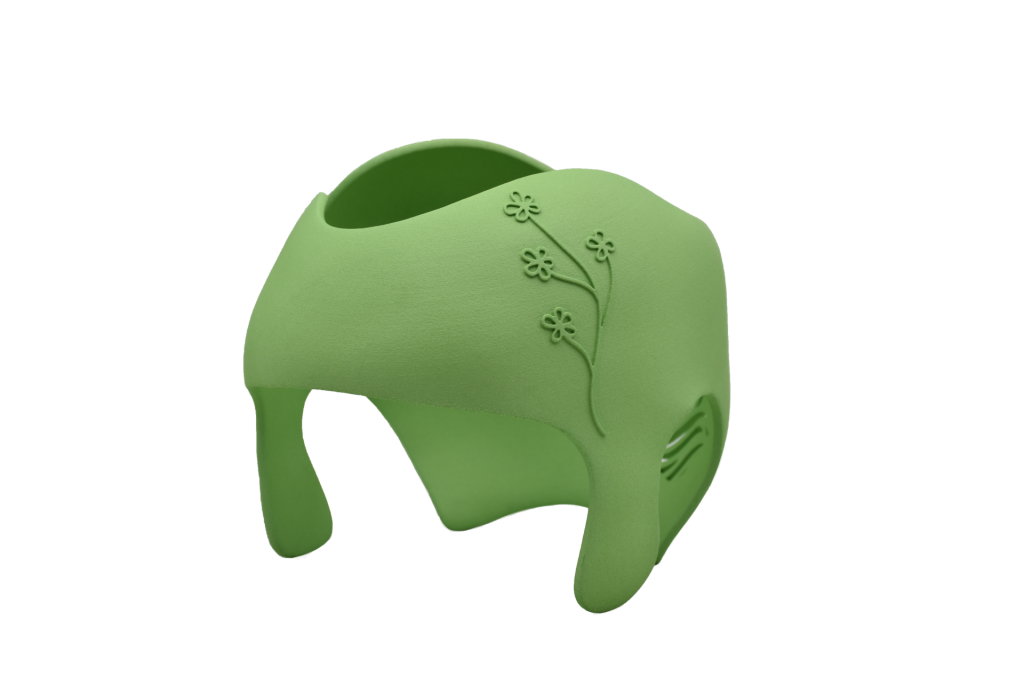
With 3D printing, ventilation features such as integrated openings, controlled shell thickness, and optimized internal clearances can be designed directly into the helmet to improve airflow.
For clinics and device designers, lightweight and breathable helmet designs help improve infant comfort and promote consistent wear time, which is essential for effective plagiocephaly treatment outcomes.
The scan-to-print approach revolutionizes CRO fitting workflows. Instead of plaster molding, clinicians capture precise cranial geometry via 3D scanning.
This digital model is corrected in CAD and sent directly to production via MJF or SLS.
Because printed helmets maintain consistent tolerances, fittings require significantly fewer manual adjustments.
For high-volume clinics, this reduces appointment time and improves the care workflow, while ensuring each baby’s head treatment device is predictable and uniform.
The two leading technologies for CRO production like Selective Laser Sintering (SLS) and Multi Jet Fusion (MJF) offer controlled mechanical properties and exceptional geometric accuracy.
SLS excels in producing complex, organic shapes, while MJF offers fine details and consistent isotropic strength.
Both technologies align with the precision demands of plagiocephaly head treatment, enabling clinicians to deliver more accurate outcomes.
Combined with Sculpteo’s certified workflows, these technologies create a fully traceable pathway from scan to final helmet.
Selecting the right polymers determines whether a CRO meets mechanical, safety, and regulatory needs.
PA12 MJF , PA 12 S MJF or PA12 SLS is renowned for durability and rigidity, making it suitable for stable helmet shells.
PA11 MJF or PA11 SLS, used widely in O&P applications, offers elasticity and impact resistance, ideal for integrated hinges and flexible zones.
Both materials deliver excellent surface quality after chemical smoothing, contributing to better hygiene and reduced skin irritation.
Professionals benefit from predictable, medical-grade behavior essential for regulated helmet therapy care.
Because CROs maintain prolonged skin contact, hygiene plays a central role in plagiocephaly helmet care.
Raw nylon surfaces are slightly porous, but chemical smoothing seals the structure, preventing sweat and bacteria accumulation.
Helmets must withstand repeated handling, cleaning, and adjustments.
PA11 and PA12 offer long-term mechanical stability, ensuring the device maintains shape throughout the treatment period.
We have different color options and chemical smoothing further increases resistance to moisture and friction.
For clinics working with multiple patients simultaneously, durable 3D-printed helmets reduce device failure rates and improve overall baby care efficiency.
Medical device production goes far beyond simple 3D printing. It requires certified processes, quality documentation, and full traceability to meet regulatory requirements. As an ISO 13485 certified manufacturer, Sculpteo combines additive manufacturing expertise with medical-grade process control.
We provide fast turnaround times, validated materials, and secure data handling, giving clinics everything they need to scale their custom CRO programs with confidence.
Whether you’re prototyping a next-generation helmet or managing repeat orders for patient treatments, Sculpteo’s digital manufacturing solutions deliver precision, and repeatability.
3D printing has reshaped the landscape of plagiocephaly treatment, empowering clinicians with tools to create lighter, cleaner, and more precisely fitted cranial remolding orthoses. Through digital workflows, biocompatible materials, and aerodynamic optimized designs, helmet therapy has become more efficient and comfortable for both patient and practitioner.
At Sculpteo, we combine more than 15 years of expertise with industrial-grade equipment. Our ISO ISO 13485 certified site ensures repeatability, while our instant online quoting system makes it easy to move from idea to production in just a few clicks.
Plagiocephaly, or flat head syndrome, is an asymmetry in an infant’s skull shape that can be corrected with a custom cranial remolding orthosis.
3D printing enables perfect customization, reduces weight, improves ventilation, and ensures consistent fit all critical to successful treatment outcomes.
Yes. Sculpteo’s PA11 and PA12 materials meet ISO 10993 standards for biocompatibility, and our post-processing ensures smooth, bacteria-resistant surfaces.
Most infants wear a CRO for 3 to 6 months, around 23 hours per day, depending on their age and treatment plan.
Sculpteo operates under ISO 13485 certification, guaranteeing validated workflows, documentation, and full product traceability from design to delivery.
Get the latest 3D printing news delivered right to your inbox
Subscribe to our newsletter to hear about the latest 3D printing technologies, applications, materials, and software.
Connect with Google
Connect with Facebook